Here’s an uncomfortable truth about working from home: the chair you’re sitting in right now is probably hurting you. If you’re using a dining chair, a cheap task chair from a bargain store, or the couch, you’re setting yourself up for chronic back pain, neck strain, poor posture, and the kind of deep fatigue that no amount of coffee can fix.
The average Australian office worker sits for 6 to 10 hours a day. Over a 48-week work year, that’s roughly 1,500 to 2,500 hours in your chair. No other piece of furniture in your home gets that kind of use. This guide explains what makes a chair genuinely ergonomic, which features matter most, how much you should expect to spend, and how to adjust your chair properly.
What Actually Makes a Chair “Ergonomic”?
An ergonomic chair is designed to support the natural alignment of your body — particularly your spine — during prolonged sitting. It does this through adjustability, contouring, and quality materials. The more adjustable a chair is, the more ergonomic it can be.
Key Features to Look For
1. Adjustable Lumbar Support
The single most important feature. Your lumbar spine has a natural inward curve. When you sit without proper support, this curve flattens, placing excessive strain on the discs and muscles of the lower back.
2. Seat Height Adjustment
Your chair must adjust in height so that your feet sit flat on the floor, your thighs are roughly parallel to the ground, and your knees are bent at approximately 90 degrees.
3. Seat Depth and Width
The seat pan needs to be deep enough to support your thighs without pressing into the backs of your knees. A seat depth of approximately 40–50cm is ideal.
4. Armrests
Armrests reduce strain on your shoulders, neck, and upper back. At minimum, they should adjust in height. Ideally, they should also adjust in width and angle (3D or 4D armrests).
5. Backrest Recline and Tilt
Research shows that a slight recline of 100 to 110 degrees reduces pressure on the spinal discs. Synchro-tilt mechanisms feel the most natural.
6. Headrest
If you spend significant time on phone calls or video conferences, a headrest supports your neck and prevents strain.
7. Material and Breathability
- Mesh: Excellent breathability, best for warm climates and long sessions
- Fabric: Comfortable and available in many colours
- Leather/PU leather: Premium look, best for air-conditioned offices
Budget Tiers
Budget: $150–$350
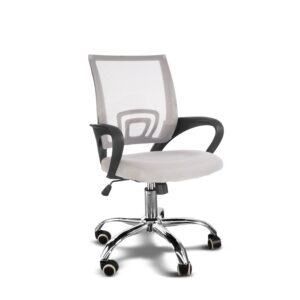
Basic ergonomic features. Suitable for part-time home office use. Browse budget office chairs
Mid-Range: $350–$700
The sweet spot for full-time home office workers. Better lumbar support, better armrests, quality tilt mechanisms. Shop mid-range ergonomic chairs
Premium: $700–$1,500+
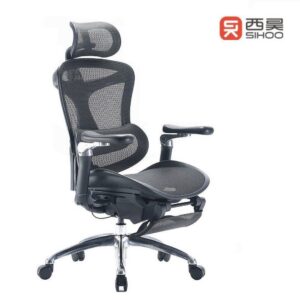
Highest adjustability, best materials, longest warranties. Explore premium chairs
How to Properly Adjust Your Ergonomic Chair
- Set your seat height — feet flat on the floor, thighs parallel to the ground
- Adjust seat depth — two-to-three-finger gap between seat edge and back of knees
- Position lumbar support — at the curve of your lower back, around the belt line
- Set armrest height — arms relaxed, elbows at 90 degrees, same height as desk
- Adjust backrest recline — 100 to 110 degrees, slight lean back
- Position headrest — cradle the natural curve at the base of your skull
- Test and fine-tune — work for 30 minutes, then reassess
Common Chair Mistakes
- Sitting too high. Always start with feet flat on the floor.
- Ignoring lumbar support. If your chair has it, use it.
- Armrests too high. They should support your arms without lifting your shoulders.
- Never reclining. A slight recline reduces spinal disc pressure significantly.
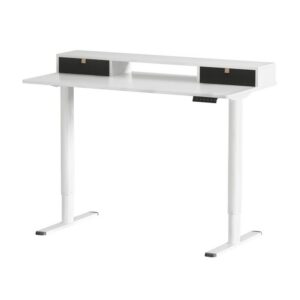
- Sitting without breaks. Stand up, stretch, and move every 30 to 60 minutes. A sit-stand desk makes this effortless.
Frequently Asked Questions
What is the best ergonomic office chair for working from home in Australia?
The best chair is one that fits your body and your budget. For full-time use, look for adjustable lumbar support, adjustable armrests, a synchro-tilt mechanism, and breathable material.
How much should I spend on an office chair?
For full-time use (5+ hours per day), aim for $350 to $700. If you sit for 8+ hours daily, investing $700+ is worthwhile for your long-term spinal health.
Is a mesh chair or a leather chair better?
Mesh is generally the better ergonomic choice because it’s more breathable, conforms to your body shape, and is easier to keep clean. Leather looks more premium and is suitable for air-conditioned environments.
Upgrade your home office chair at Home Sweet Office. Free shipping over $150 on every order. Pair it with a sit-stand desk and a monitor arm for the complete ergonomic setup.